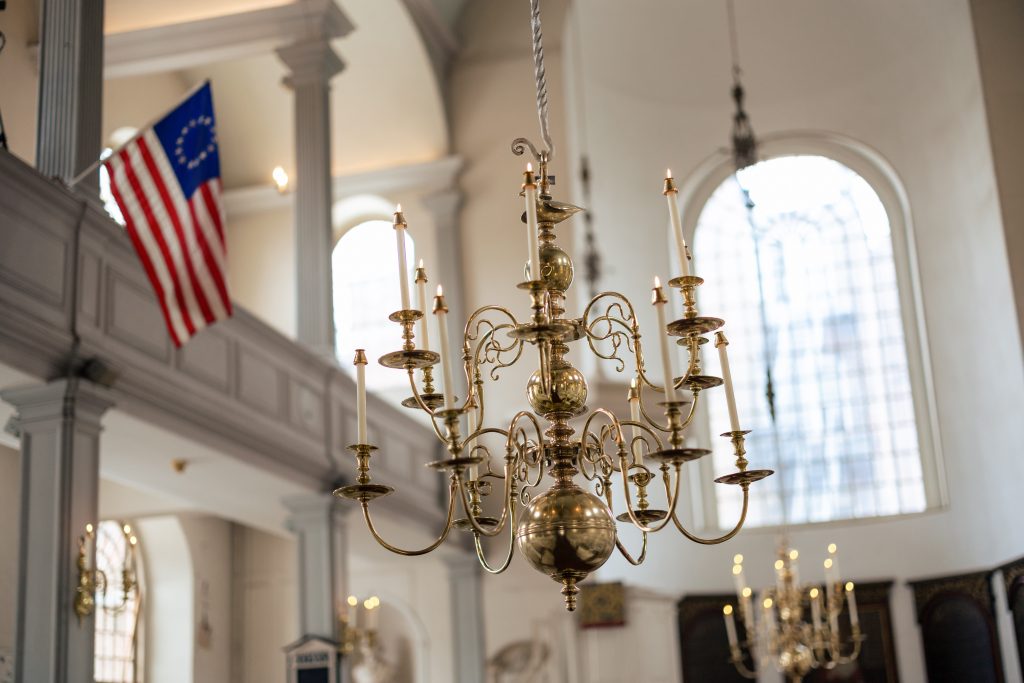
A place of pilgrimage for hundreds of thousands of tourists every year. When sexton Robert Newman and vestryman John Pulling shone two lanterns from the steeple on April 18, 1775, they signaled the birth of the American nation and the beginnings of the freedom which we have long cherished and still strive to proclaim. Nearly a century later, in 1861, Boston poet Henry Wadsworth Longfellow used the story of the lanterns and Paul Revere’s ride to rally his fellow Northerners to persevere in the fight against slavery. With the publication of “Paul Revere’s Ride,” Old North Church became an internationally known symbol of freedom from all forms of tyranny and oppression.
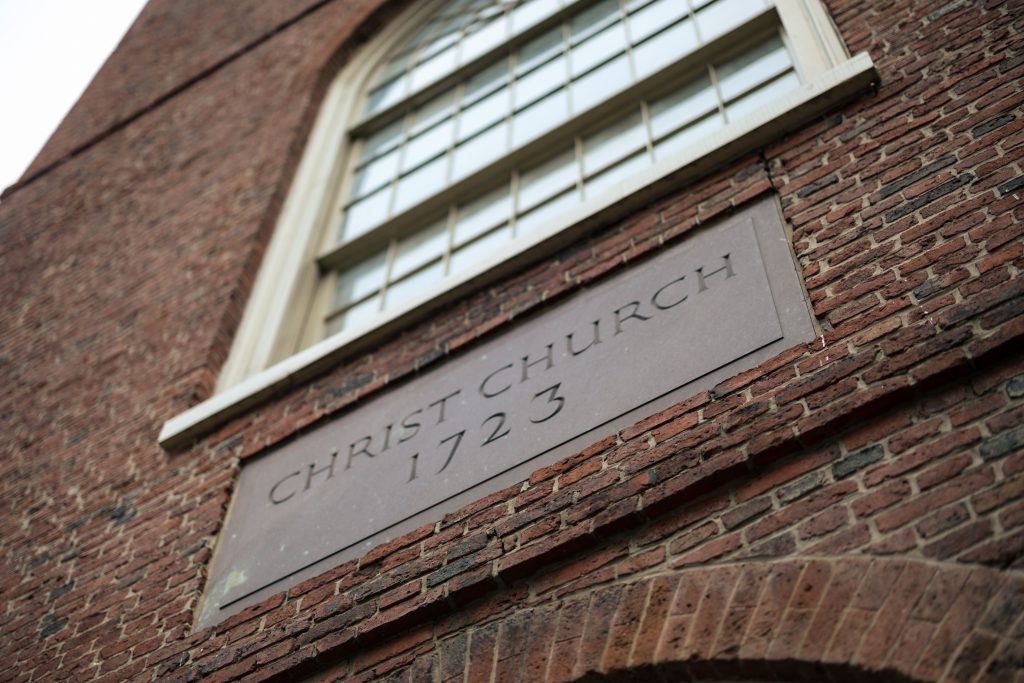
Built in 1723, Christ Church in the City of Boston, better known as “the Old North Church,” is both the oldest church building and the oldest Episcopal congregation in Boston. Although established as a Puritan city, Boston’s colonial Anglican community outgrew the first Church of England parish (King’s Chapel, est. 1686), necessitating a second church in the North End of the city. Local master builders followed sketches of London churches designed by Sir Christopher Wren and raised the building in six months. The soaring steeple that shaped American history was added in 1740 – then the tallest structure in Boston.
History of the Congregation
The first rector was the Rev’d Dr. Timothy Cutler, a Congregationalist minister and rector (president) of Yale College until his conversion to Anglicanism. After returning from London for ordination in the Church of England, he preached the inaugural sermon on the Isaiah text, “My house shall be called a House of Prayer for all people.” Early congregants reflected all social strata, including wealthy colonists, ship captains, farmers, artisans, enslaved and free African Americans. Over 100 enslaved and free Africans were baptized, married, and buried at Christ Church in the 18th century.
Charles Wesley, co-founder of Methodism, preached at Christ Church over successive Sundays in 1736 (the only extant church in which he preached during his 1735-1736 trip to North America). In 1750, Paul Revere, then 15 years old, joined the guild of bell ringers – the second signatory on the charter – soon becoming familiar with the tower he would make famous.
Prior to the Revolution, those who would become Patriots worshiped alongside Gen. Thomas Gage, royal military governor, and Maj. John Pitcairn of the royal marines. The Rev’d Dr. Mather Byles, Jr., Loyalist second rector, resigned on April 18, 1775. That night parishioners Robert Newman and John Pulling shone two signal lights from the steeple, alerting Patriots of the king’s troops advancing toward Lexington by water. The first Revolutionary battles were fought the next day. Thereafter, the church was closed until 1778 when the Rev’d Stephen C. Lewis, a British army chaplain, offered to swear allegiance to the United States and became third rector.
In 1779 the vestry voted “that the Rev’d Mr. Lewis be desired to prepare a proper form of Prayer for the Congress of the United States, for the several States, and for their success in the present important Contest, to be used Daily in the Church.” Prayer Book references to the king were covered and prayers for the Continental Congress added. After the Revolution, Christ Church helped to establish the new Protestant Episcopal Church in the United States.
The Rev’d Dr. Asa Eaton led the church from 1805-1829 through a period of tremendous growth, including establishment of the first Sunday school in Boston and a Presidential visit by James Monroe in 1817. But being situated in an increasingly poor immigrant neighborhood led to financial struggles. Evidence of challenging circumstances was the “Fragment Society,” in which parish women sewed clothing for poor children to wear to Sunday school and returned by Monday morning for use the next weekend.
Christ Church’s vestry welcomed the first woman into its ranks in 1911—Miss Matilda Bibbey, a teacher in the heavily immigrant community of the North End. She served as the sole vestrywoman into the 1920s.
1912 Renovation
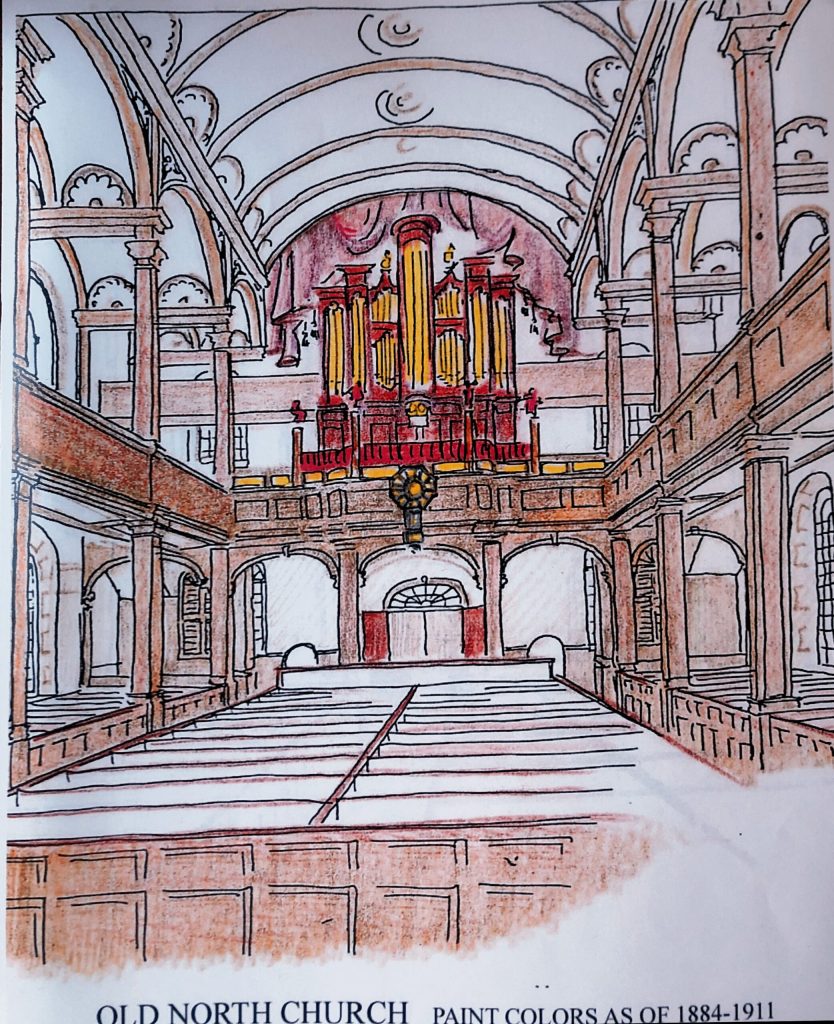
The church undertook a major renovation in 1912, attempting an authentic colonial appearance with the reinstallation of box pews, wineglass pulpit, and white color scheme. The renovation was overseen by Bishop William Lawrence, who personally undertook the necessary fundraising. Former President Theodore Roosevelt attended the reopening dedication.
As the neighborhood welcomed new waves of immigrants, the congregation responded by building a chapel to serve Italian Waldensians, a Protestant community predating the Reformation. The St. Francis Chapel, built in 1918 and decorated in Italianate style, served this congregation into the 1950s under the direction of Episcopal City Mission. Once no longer needed for worship space, the chapel was transformed into the Old North Gift Shop, in support of the increasing number of tourists.
Old North became a mission of the Diocese of Massachusetts in 1939, due to low membership and financial hardship during the Great Depression, with the bishop of Massachusetts holding the title of rector ex officio and a vicar appointed to oversee regular ministries. The Rev’d Francis Ellsworth Webster, rector since 1930, served as the first vicar until his death in 1941. The church became an increasingly popular tourist site into the 20th century, even as successive vicars and congregational leaders sought to find ways to minister meaningfully in the neighborhood.
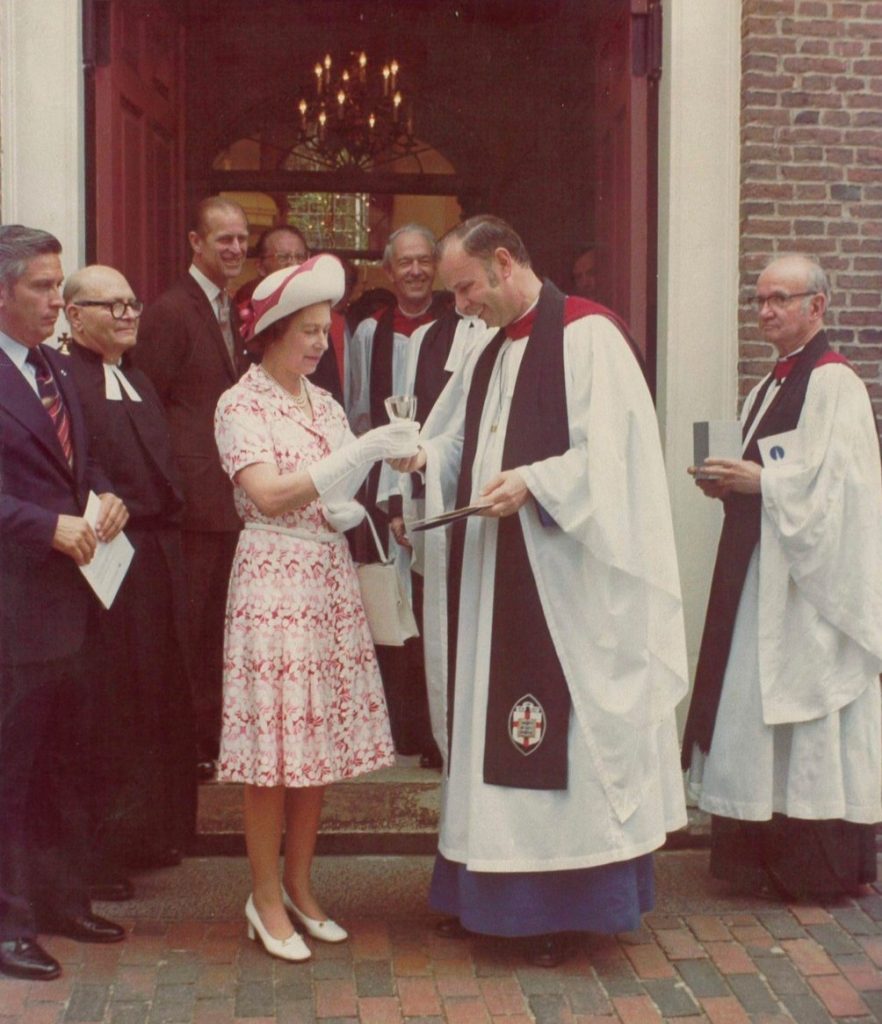
The Rev’d Dr. Robert Golledge, vicar from 1971 to 1996, led the church during the nation’s Bicentennial celebrations, inviting President Gerald Ford to speak on April 18, 1975 – the 200th anniversary of the hanging of the lanterns – and overseeing the visit of Queen Elizabeth II in July 1976. Dr. Golledge spoke forcefully to church and city on racism and desegregation, serving on Mayor Kevin White’s bi-racial committee on violence and hostility.
Historic Preservation & Interpretation
The Old North Foundation (now Old North Illuminated) was established in 1991 as a separate non-profit. Today it manages historic site programming and building preservation. Its skilled staff join the Old North congregation in sharing the story of the Old North Church with the nation and world.
In 1997 the Rev’d Stephen Ayres was appointed vicar and eventually as Executive Director of the Old North Foundation, overseeing an expansion of educational programs and building restoration. Recent research revealed that some early parishioners had been slave ship captains, leading to a renewed emphasis on racial justice and the need for further study as we seek to embody the liberty and freedom that make Old North well known.
The Rev’d Dr. Matthew P. Cadwell joined Old North as the church’s seventh vicar in 2020. We celebrated our 300th anniversary in 2023, welcoming Presiding Bishop Michael Curry and embracing the call to shine beacons of light, justice, and love in our city and world. We are committed growing in membership and diversity, ever expanding our understanding of freedom to include all of God’s people in each new age.
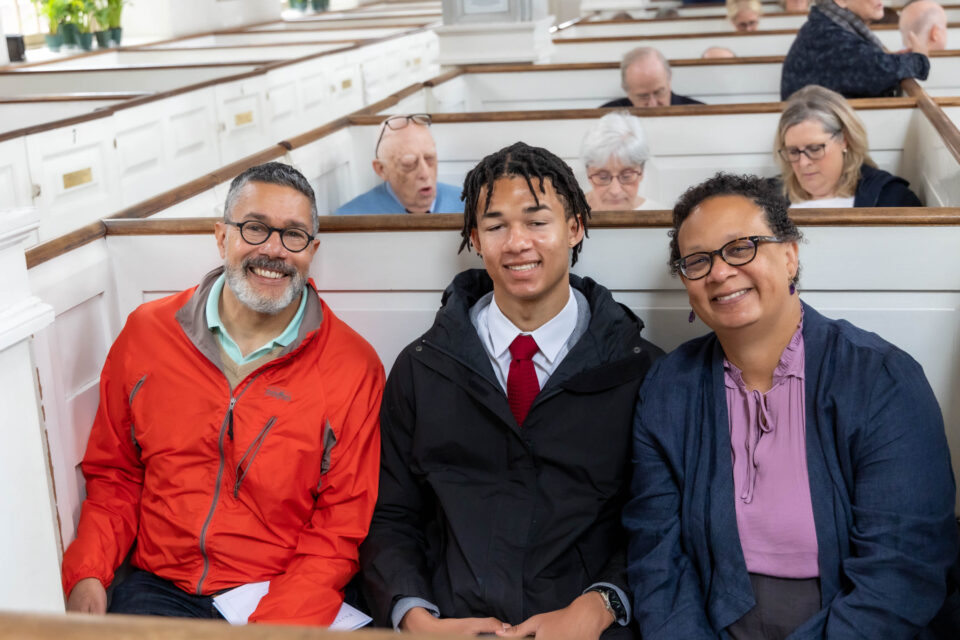
Get to Know Us and Join Us for Worship
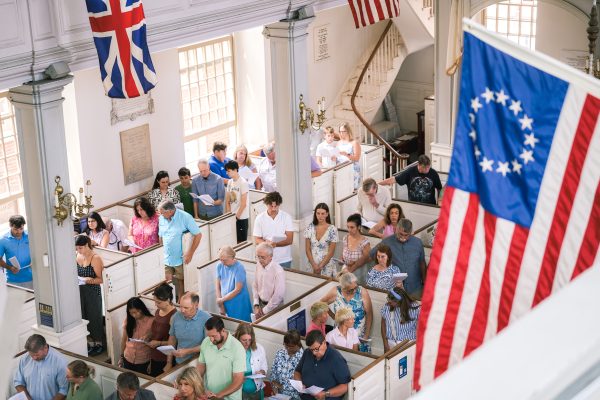
We are Boston’s oldest Episcopal (Anglican) Church — shining beacons of justice, love, and light for more than 300 years.