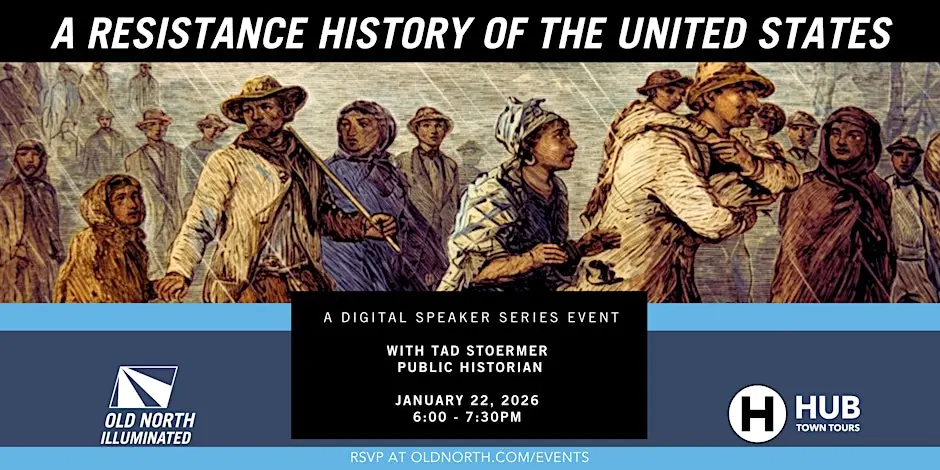
In his forthcoming book, A Resistance History of the United States, public historian Tad Stoermer argues that the U.S. was shaped by resistance—but not in the way we’ve been taught. The American Revolution did not secure liberty for the masses; it opened the door to either liberty or oppression, where only white men enjoyed all of the benefits and protections of citizenship. From the very beginning, that tension—between the ideals of resistance and the realities of power—has defined America more than the Enlightenment ideals enshrined in the Declaration of Independence and the Constitution.
Tad joined us on Zoom for a discussion about his new book and the resistance movements it chronicles. The wide-ranging talk touched on a number of pivotal moments in American history, including:
- Bacon’s Rebellion/Metacomet’s War (1676)
- Salem Witch Trials (1692)
- The Black Loyalists (1783)
- The Underground Railroad (1850)
Through these stories of resistance, Tad dismantles the mythologies that pass for American history—exposing the curated nostalgia, moral evasions, and institutional silences that have long protected abusive power. What emerges is an essential look at how we can take lessons from the past to understand and effectively respond to the injustices we face today.