The Women of Old North Church
Here at Old North, women from all different backgrounds play important roles on our campus, as educators on the church floor, gift shop employees, staff in the Old North Illuminated offices, and leaders in the congregation. Although the women of Old North today are celebrated for their contributions to our site and its history, the women of Old North in the colonial era were not always given the same acclaim. In this section, we’re shining a spotlight on a handful of women connected to Old North from the 18th century to today, and sharing their important stories.
The Women’s Guild
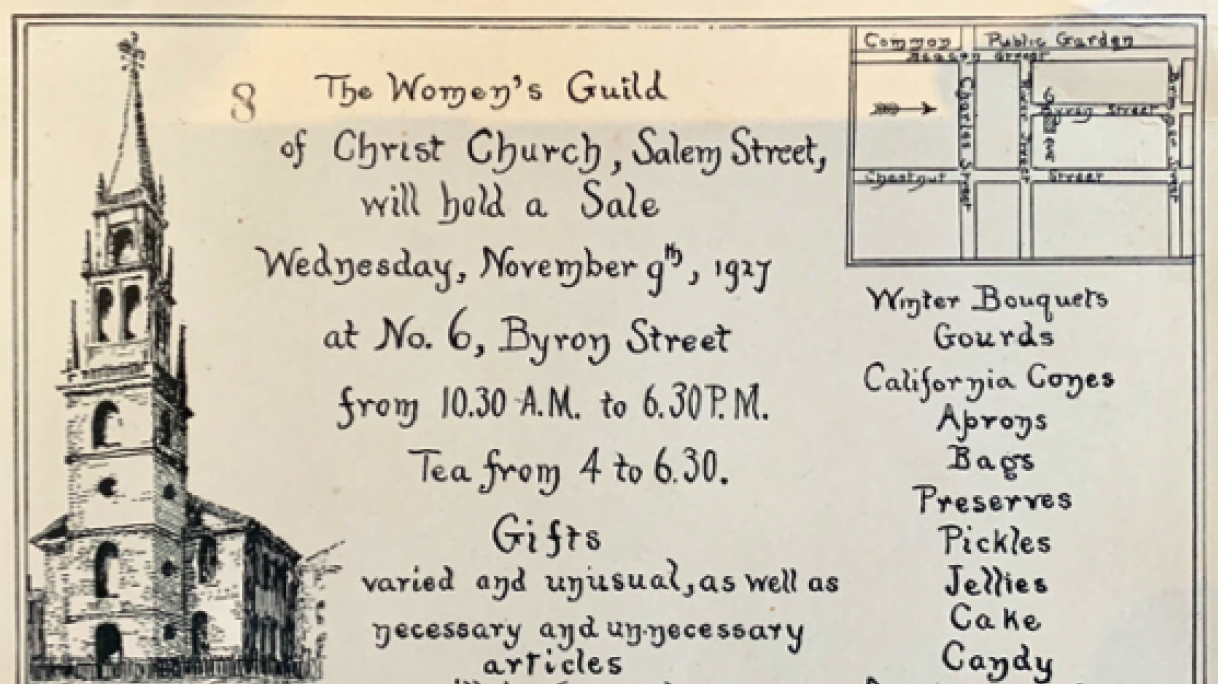
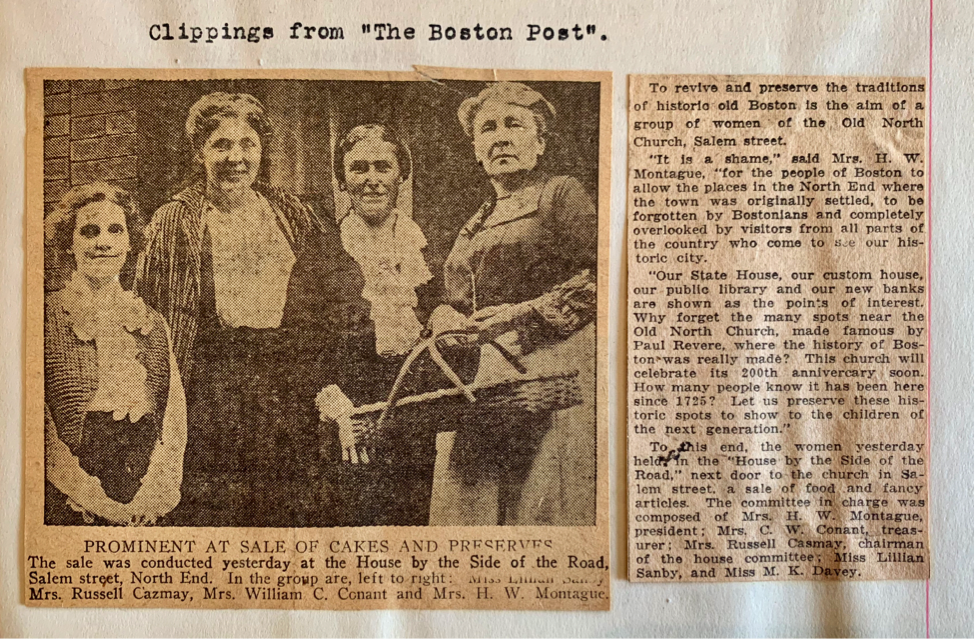
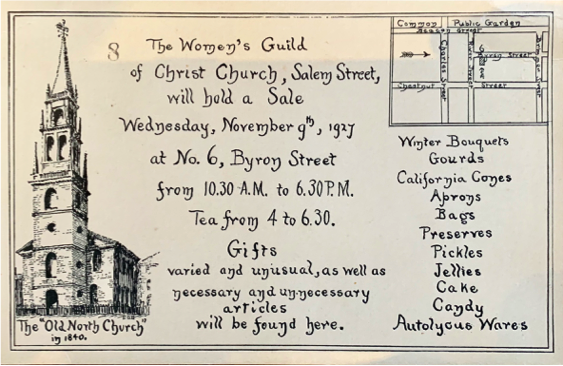
The Women’s Guild was far more than simply a social club for the female members of the Old North congregation. The organization proved to be a prominent source of support for the church in the first half of the twentieth century, whether it was through maintaining the church’s status as a welcoming community space or contributing financially with fundraising events like sales.
Women of Note
Jane Franklin Mecom was the younger sister of Benjamin Franklin and the closest to him of his sixteen siblings. The two were lifelong correspondents, and in fact, Benjamin wrote more letters to Jane than to anybody else. Despite their close relationship, the two siblings lived very different lives. While Benjamin went on to become a celebrated politician and statesman, Jane was married off at the unusually young age of fifteen to Edward Mecom, an alcoholic and mentally unstable man whom Jane never wrote lovingly about, and with whom she had twelve children. She outlived all but one of them. Her life was one of hardship, and, without a reliable income from her husband, she took to making soap to support her family.
Jane spent the majority of her life in Boston. In 1784, she moved into a house her brother had owned for two decades on Unity Street. It was in the shadow of the Old North Church, and although it is unlikely that she ever attended services there, she asked her brother to add “at the back of the North Church”* to all his correspondence so that the letters would arrive more speedily. She took pains to keep the house presentable and painted the doorframe so that it would look respectable in case anyone came looking for the sister of the famous Benjamin Franklin. Although the house she lived out the last years of her life in was knocked down in 1939, it shared a wall with and looked very similar to (albeit narrower than) the house next door: the Clough House, where our Unearthing Childhood exhibit is staged.
Commentary: Jane was an early entrepreneur and supported a large family with her small soap-making business and shop. And despite having only a very rudimentary education, she had a lifelong passion for reading and writing.

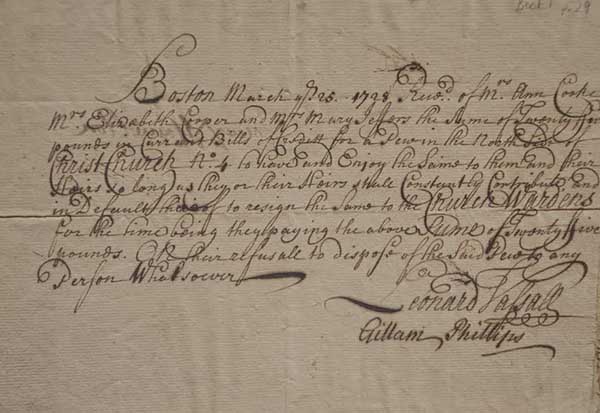
In 1728, three married woman made the unusual choice of buying a box pew at Old North — not with their husbands and families, as might be expected, but with each other. We don’t know what brought Ann, Elizabeth, and Mary to the decision of buying a seat together. Were they widowers? Were they married women who decided to worship apart from their husbands? Were they very good friends, or bound together by financial constraints and the social necessity of belonging to a church like Old North?
Commentary: These three women embodied the spirit of independence, choosing to forgo sitting with male relatives in order to buy their own box pew to sit in for Sunday worship. They are the epitome of friends who worked together to achieve what each one on their own would have been incapable of.
Elizabeth Humphries was the matriarch of a free Black family who worshiped at Old North in the mid-eighteenth century. Elizabeth, her husband John, and their children would have sat in the upper North Gallery, the only part of the church available for free and enslaved people of color. Church records reveal that eight of John and Elizabeth’s children were baptized at Old North, five of them on the same day. Church records also reveal that Elizabeth Humphries and her family helped care for an indigenous woman named Jerusha Will when she was very ill during the final weeks of her life. After John passed away in the 1750s, Elizabeth Humphries fell on hard times and was not able to financially support her family. In accordance with the harsh Boston laws of the time, she was sent to the poor house, and four of her young children were indentured to other families. From there, we do not know what became of Elizabeth Humphries or her children. We hope that ongoing research will help us uncover more of their story.
Commentary: Elizabeth shows us that strong women of color have always been a part of American history, working behind the scenes to provide for their families and playing visible roles in their communities, despite the hardships of harsh economic realities for free people of color.
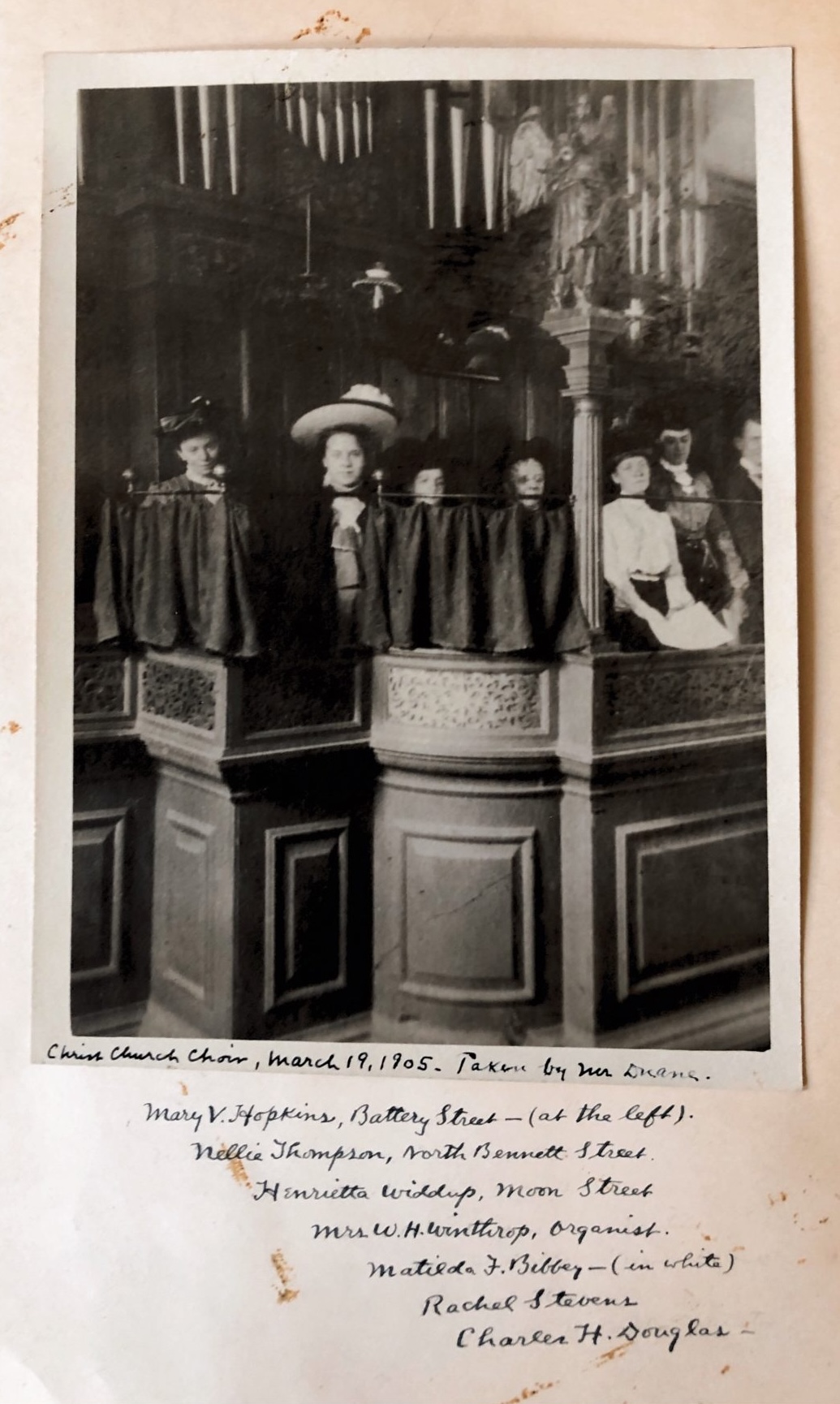
Matilda Bibbey was a trailblazer for 20th century women at Old North Church. Born in the North End to immigrant parents, Bibbey dedicated her life to education and helping others. She began her teaching career at an all-girls school before transitioning to the Boston Public Schools in the North End, where many of her students would have been immigrants or children of immigrants and English language learners. Matilda Bibbey was also a leader within the Old North community. She was the first female member of the Old North Church vestry, a board of lay leaders who oversaw day-to-day operations at the church. She was also a founding member of the Women’s Guild, working with other women at Old North toward the preservation and continuation of Old North Church through fundraisers, events, and community outreach. She and her sister Gertrude each owned a pew at Old North, which was still rare for women even by the early 20th century.
Commentary: Matilda Bibbey exemplified active citizenship. Throughout her life, she worked within and outside traditional gender roles to effect change in her community.
More About The Women of Old North
Learn more about the women who worshiped at Old North Church.