History Mystery
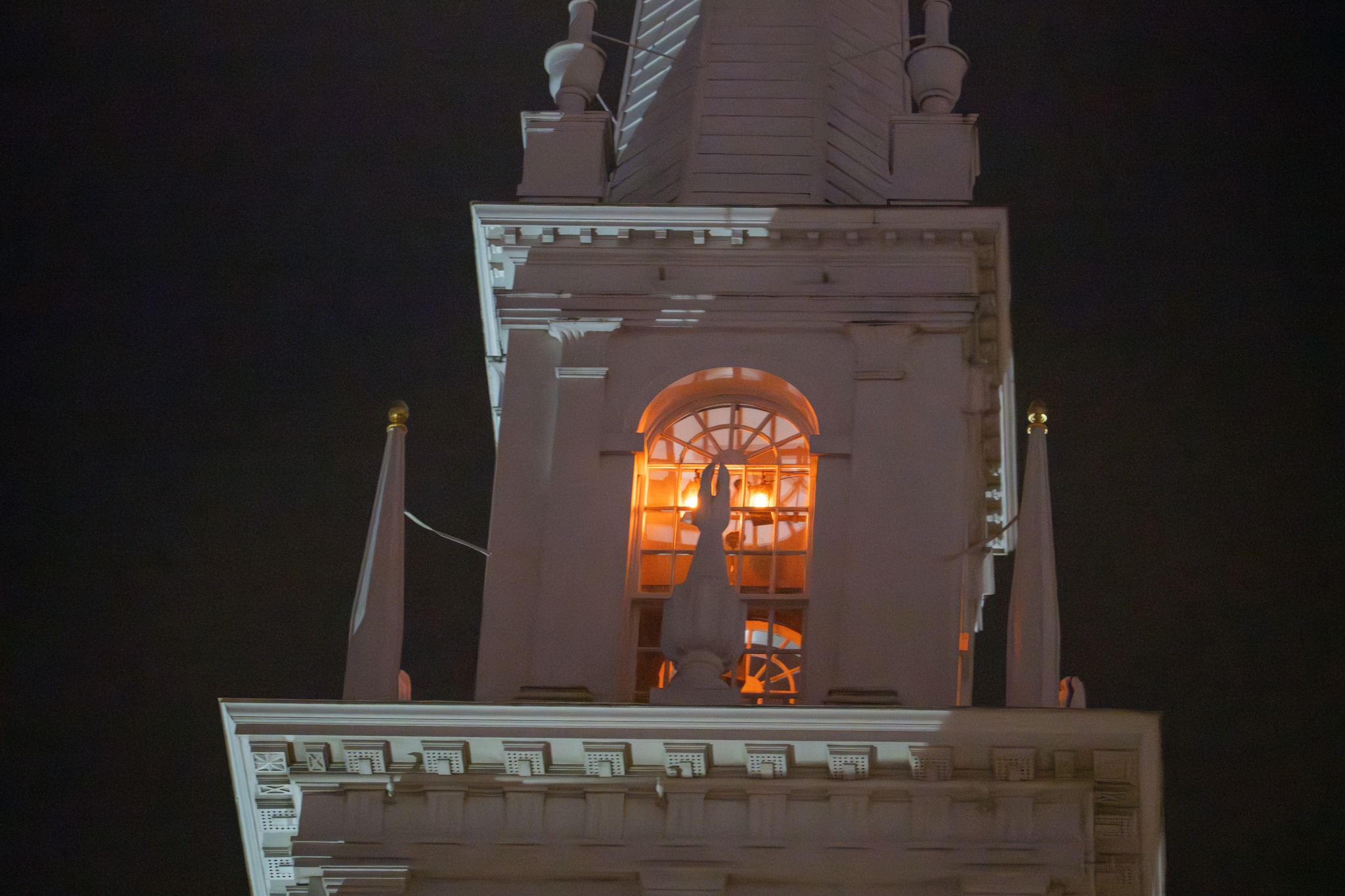
“Old North, the Revolution, and a History Mystery” is a three-part video program filmed onsite at Old North Church & Historic Site. As students work to solve the mystery of who hung the signal lanterns at Old North, they learn about crafting evidence based arguments and evaluating for bias. These videos and accompanying activities are ideal for upper elementary and middle school level students.
Thanks to the generosity of our donors, these videos and all supplemental activities are available to teachers, parents, and afterschool programs free of charge.
Old North, The Revolution, And A History Mystery
As we commemorate 250 years of American Independence in 2026, there has never been a better time to teach History Mystery!
Our three-part video series tells the story of Old North’s role in the American Revolution and invites students to play detective as they solve the “history mystery” of who held the signal lanterns. Designed for upper elementary and middle school classrooms, History Mystery teaches students to look at sources with a critical eye and ask important questions. What bias might an author have? What are their credentials? What sources did they draw on? What is fact and what is opinion?
History Mystery is a three-part video series that explores the events leading up to the Battles of Lexington and Concord through the lens of Old North Church. Videos can be viewed in one sitting or as separate episodes. Total run time is approximately one hour.
Part One: Colonial Boston, Old North and the Origins of the Revolution focuses on Old North and the events that contributed to increasing tension in colonial Boston; Topics covered include:
- Historical context
- 18th century Boston
- Seven Years War
- Parliament’s taxes and colonial protests
- Patriots and Loyalists
Part Two: The American Revolution and Paul Revere’s Ride further explores the events that led to the American Revolution and discusses the details of Paul Revere’s ride. Topics covered include:
- Boston Tea Party
- Intolerable Acts
- Sons of Liberty
- Battles of Lexington and Concord
Part Three: Who Held the Signal Lanterns? guides students through source material as they build an argument while considering the role of context in the interpretation of historical events. Topics covered include:
- Review of Paul Revere’s ride
- Robert Newman and Captain John Pulling, Jr.
- Bias
- Analyzing sources including letters, speeches and plaques
- Using evidence to support an opinion
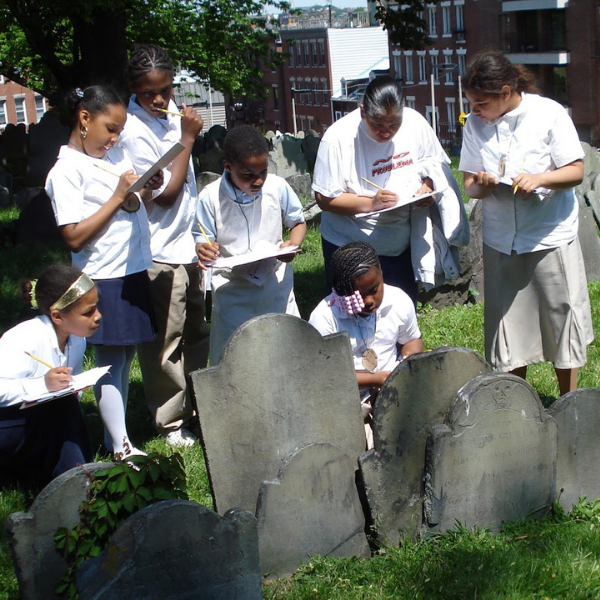
Learning outcomes for History Mystery include:
- Students will learn how Old North and Boston fit into the story of the American Revolution
- Students will be challenged to build an evidence-based argument for the most likely “suspect” in the mystery of who held the lanterns on April 18, 1775.
- Students will be introduced to the concepts of context and bias in historical analysis
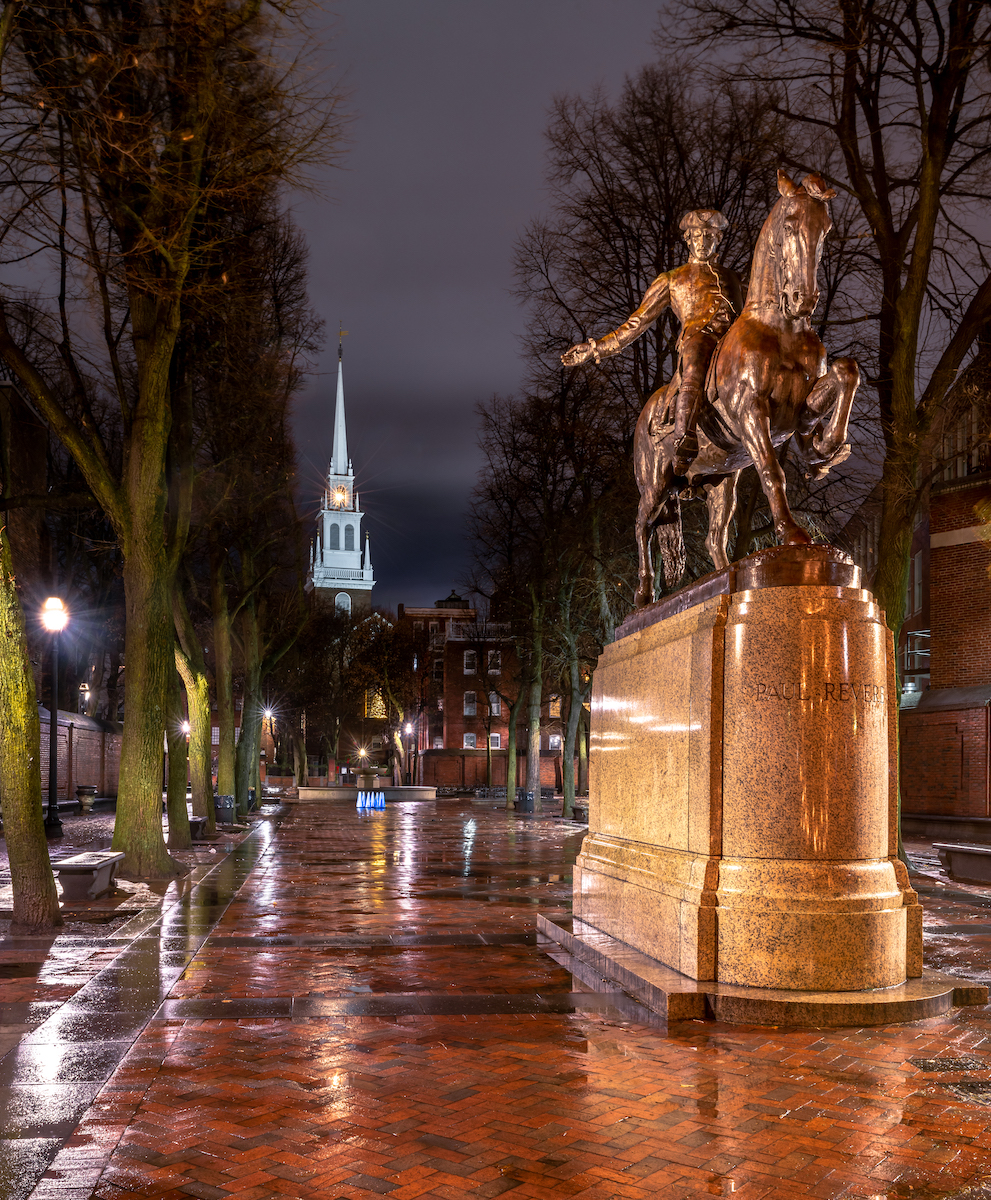
Highlights relevant for the 3rd and 5th grade history frameworks include:
- Students will learn about the diversity of political opinion in a colonial city like Boston, using Old North’s community as an example.
- Locate Old North Church as an important site in Pre-Revolutionary and Revolutionary history and analyze the role and significance of Paul Revere. (5.T2.2)
- Explain the relationships and interactions between people, ideas and historical concepts to understand the importance of teamwork and the many ways people can be involved in civics. (5.RI.3)
- Determine one or more main ideas of a primary source and cite specific textual evidence to support analysis of primary sources. (5.RI.2; RCA-H.1)
- Identify reasons for the American Revolution (including how Boston’s unique geographical and political situation shaped what happened).
- Recognize cause/effect relationships and explain motivation for and consequences of decisions made in the past.
- Integrate information from several texts on the same topic to build an argument. (5.RI.9)
Students will have the opportunity to develop and practice numerous related skills, including:
- Listening and comprehension skills
- Responding to questions and making comments that contribute to discussion. (5.SL.1)
- Drawing conclusions from knowledge gained from discussion. (5.SL.1)
- Introducing an argument and supporting it with logical reasoning and relevant evidence. (WCA.1)
- Evaluating a source, including distinguishing among fact, opinion and bias.
- Empathy-building for views and opinions that differ from one’s own.
Acknowledgements
History Mystery is supported by the City of Boston’s Arts and Culture COVID-19 Fund and The Hamilton Company Charitable Foundation.